B2C · Industrial Design · SmartHome, Connected Hardware & App · 2015-2017
From accessories to connected experiences
Smart Plug & SmartPlug Pro. I proposed smart home to Artwizz, a smartphone accessory brand and led its first connected product across hardware, app and production. The first run sold out in weeks. Then both manufacturers withdrew.
Context
Artwizz made accessories for smartphones. In 2014/2015, I proposed smart home to management as a new direction for the company. The result was two smart plugs, SmartPlug and SmartPlug Pro, controlled with the ArtwizzSmart app for iOS and Android. It was the company's first connected product.
The products reached launch, but manufacturing constraints ultimately made the business unsustainable. This case study covers both the design leadership behind the launch and the limits we encountered.
The team
8 people
Internal design:
Me (Lead Design)
Svenja Koßmann (Product Design, App)
Eike Maaß (Product Design)
Alina Fuchs (Packaging) (UI Design)
Marco Foof (Software Engineer)
External (client side)
Mike Lee (Project Management)
Raymond Sheen (Project Management)
2 Engineers
My role
Lead Designer
→ Product Strategy
→ UX & Design Direction
→ Technical and safety requirements
→ Production in China
Timeline
2015-2017
Challenge
Artwizz had built a strong position in smartphone accessories, including established retail relationships with MediaMarkt-Saturn in the DACH region. By 2014 I saw that the brand had to grow beyond them to stay attractive in the long run.
Smart home was developing well, and more and more of daily life was moving onto the phone. For an accessory brand, I saw a large opportunity in products for the home, controlled with the phone people already carried that were underrepresented in our retail channels.
I brought this direction into discussions with management. The goal was to explore a new category without losing the accessibility and retail relevance of the existing brand.
This project is under a non-disclosure agreement.
The client, product and internal system names have been generalised. Screens have been anonymized, and all names, figures and data shown in them are fictitious.
An established smartphone market, an emerging connected home
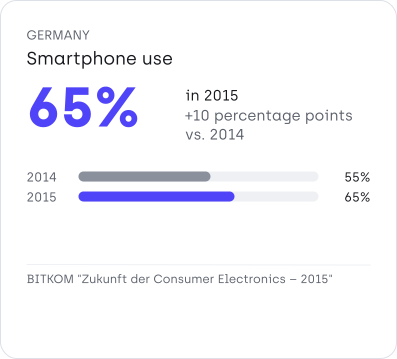
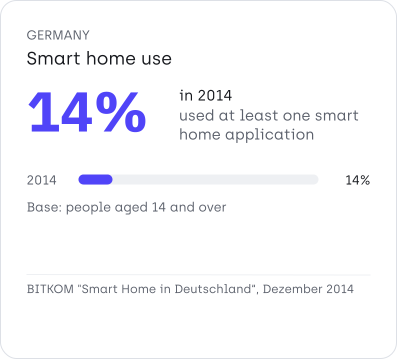
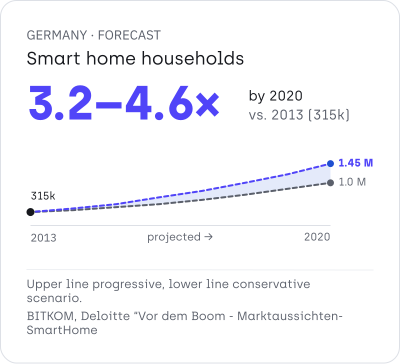
In Germany, the smartphone use kept rising and people aged 14 and above were already using at least one Smart Home application. These figures supported the broader opportunity I had observed: smartphones were mainstream, while connected home products were still at an early stage.
Artwizz’s retail position and my observation of limited Smart Home shelf presence informed the proposed direction. The subsequent product work had to test whether that opportunity could become something tangible.
I proposed smart home as Artwizz's next step
Artwizz made accessories for smartphones. By 2014, I saw that the brand had to grow beyond them to stay attractive in the long run. Smart home was developing well, and more and more of daily life was moving onto the phone. For an accessory brand, I saw a large opportunity in that: products for the home, controlled with the phone people already carried. I proposed this direction to management, and they agreed. The smart plugs became the company's first connected product.
It was still early, as at the end of 2014, only 44 percent of Germans knew what smart home meant, and 14 percent used at least one smart home application.

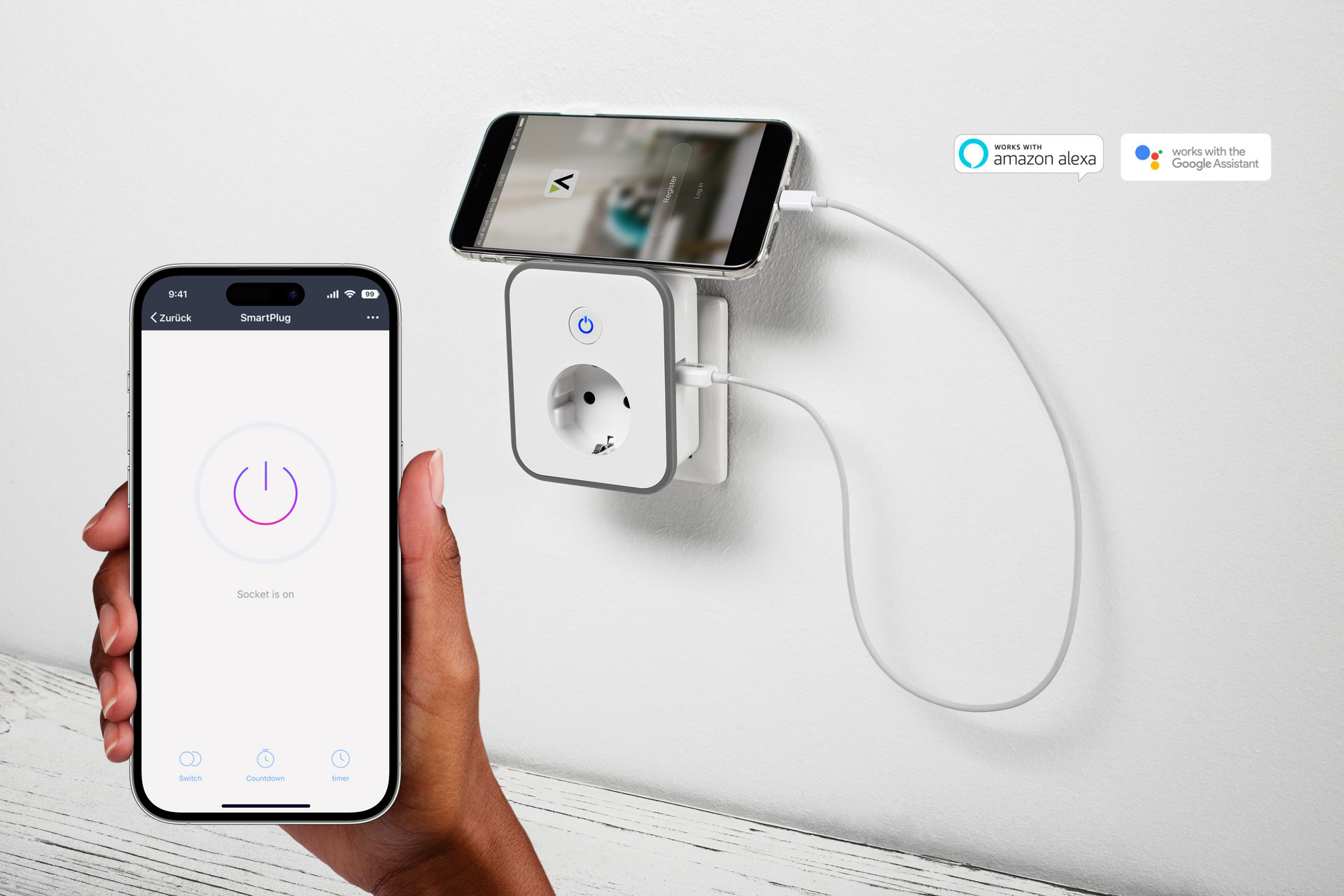
ArtwizzSmart app and SmartPlug in use. © Artwizz GmbH
Form, prototypes, packaging, app adaptations
2 industrial designers, 1 packaging designer, 1 software engineer and me
The app platform
A white-label app, adapted to the plugs
Engineering and production
An independent project manager and the manufacturer
TÜV Safety testing and certification
Required for sale in Germany
People wanted to switch it by hand and see whether it was on
The team ran six interviews together and a survey with about +10 people. It was a small, exploratory sample. People asked for a physical button that switches the power on and off, with an LED that shows whether it is on. So both plugs had to work like something people already knew. The app could add timers, schedules and scenes on top.
This shaped the decisions below: the size and form of the plugs, the choice of app platform, and the second model.
Design, packaging and engineering reported to one person
I put the team together from people already working at Artwizz. Eike Maaß and Svenja Koßmann took both plugs from research and ideation to the final prototypes, including tests. Alina Fuchs developed packaging that fit the product and used sustainable materials. Our Software Engineer assessed the app options. In China, Mike Lee managed the project independently, and Raymond Shen oversaw engineering at the manufacturer. Both reported to me as well.
I kept three things with me: the technical requirements, TÜV testing, and coordination of production with the manufacturer. These were the points where design intent could get lost between disciplines and countries, so I wanted one person to answer for them.
On visits to China, my team and me went through the specifications with our partners there and clarified the technical requirements in person.

Decision 1
We tested in our own homes to keep the plug small
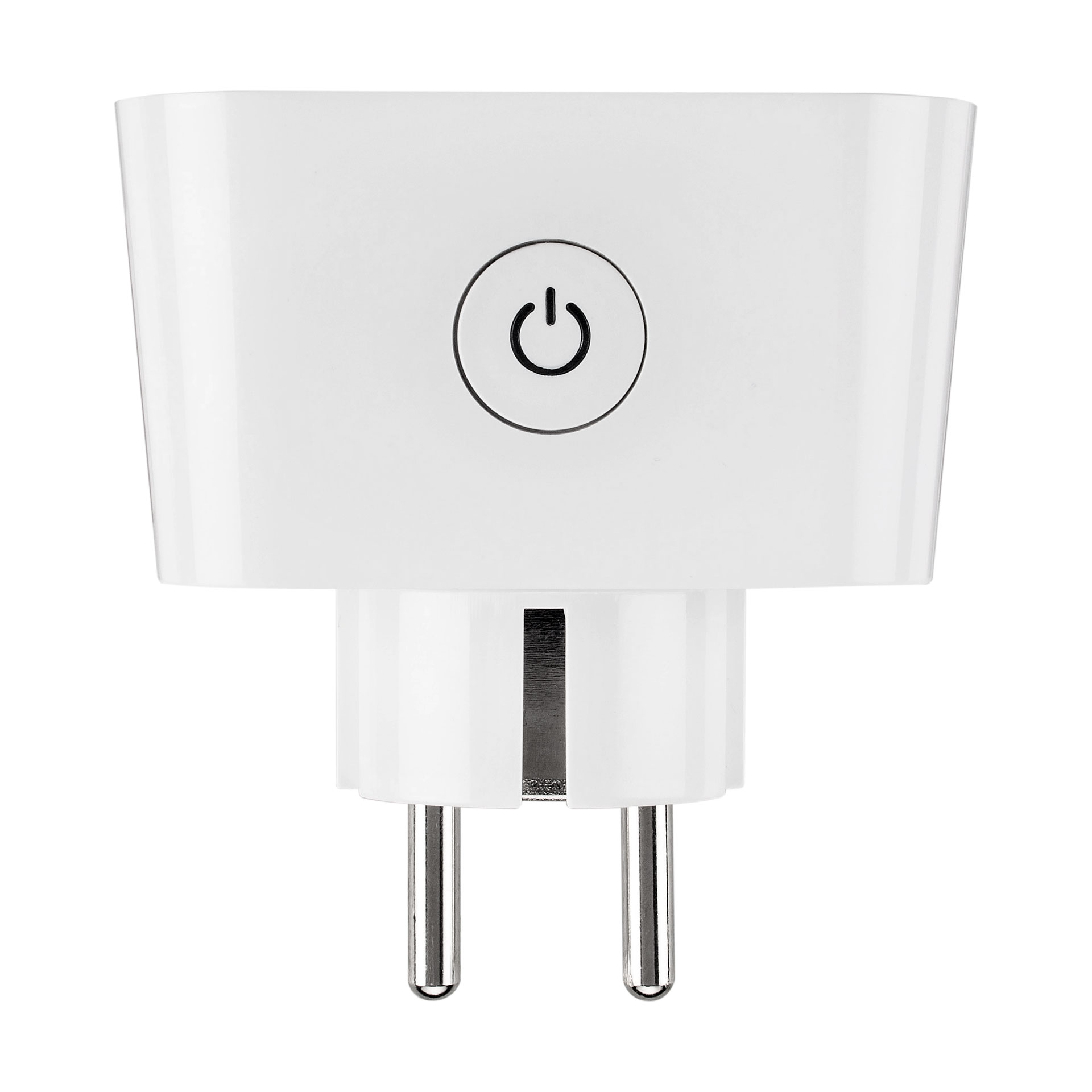
We wanted a compact plug to provide a handy device. The manufacturer's engineering planned a conventional construction, which made the plug larger than we had specified. The manufacturer had no electronic components for a smaller build, and with the components it had, the safety clearances for the electronics could not be reduced.
The safety clearances were a fixed limit. They also would have cost more time and money, hence we stayed with the existing ones ad could still influence the space around them. We filmed the places in our own homes where a smart plug would be used and showed engineering how little space there actually was. The manufacturer then reduced the size as far as its components allowed, down to the space the electronics needed.

Aligning disciplines before committing to concepts
Before design concepts were developed, I worked with management and an IT colleague to bring the relevant perspectives into the conversation, software UX and engineering, industrial design, hardware interaction, research, product development and project management.
The intent was to surface dependencies early. A choice about hardware could affect setup and interaction in the app. A software constraint could change what the physical product needed to communicate.
I set and maintained the cross-product design direction while the team and partners worked within their specialist responsibilities. Early alignment was a way to reduce avoidable rework, not a guarantee against later delivery risks.
Keeping physical control in a connected product
Interviews challenged the idea that a smartphone could replace every physical interaction. A plug might control a lamp or another device that people switched frequently, while the socket itself could be difficult to reach.
The research reinforced the importance of a familiar physical on/off control and surfaced the value of having a place to put a phone near the adapter. I translated these needs into the hardware interaction discussions rather than treating app control as sufficient on its own.
The available documentation does not establish the interview sample size or show how widely these needs were shared. I treat them as directional findings, not validated population-level preferences.
Decision 2
Choosing a white-label app over a custom build
The original plan was to build our own app. When we discussed it with management, our softrwae engineer proposed a white-label platform from Tuya instead. We compared what each option would cost in people and money, and what the risks were.
My part was weighing the benefits against the limits. A finished app and its digital infrastructure meant we could adapt it and launch it directly, gain first experience with connected products, and later bring a whole family of Artwizz products into one app. The limits were just as clear, and I named them: control stayed with Tuya, we could change the UX and UI only within a narrow frame, and we had no independent control over the data.
Privacy was a common concern at the time. In a BITKOM survey from 2014, 24 percent of people who did not want a smart home said they feared for their privacy. For a first step into connected products, the benefits outweighed the limits.
Within that frame, we adapted what mattered most to people:
- The setup flow
- Scenes and rooms, arranged according to tests with potential users
- The appliances people would switch with the plug, available to choose in the app
- UX copy, revised after internal tests
- A German translation of the app
- UI in the Artwizz corporate design
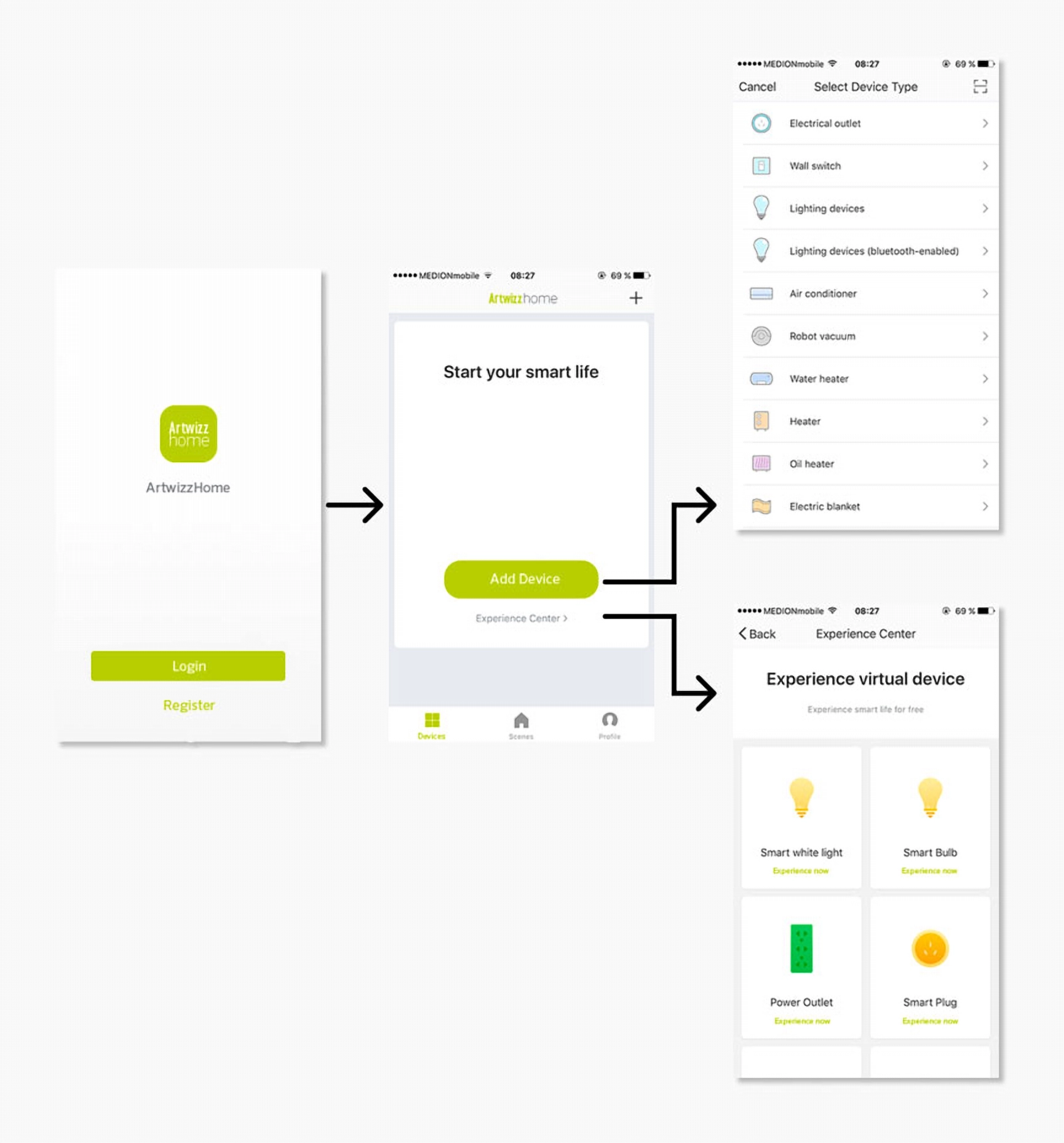
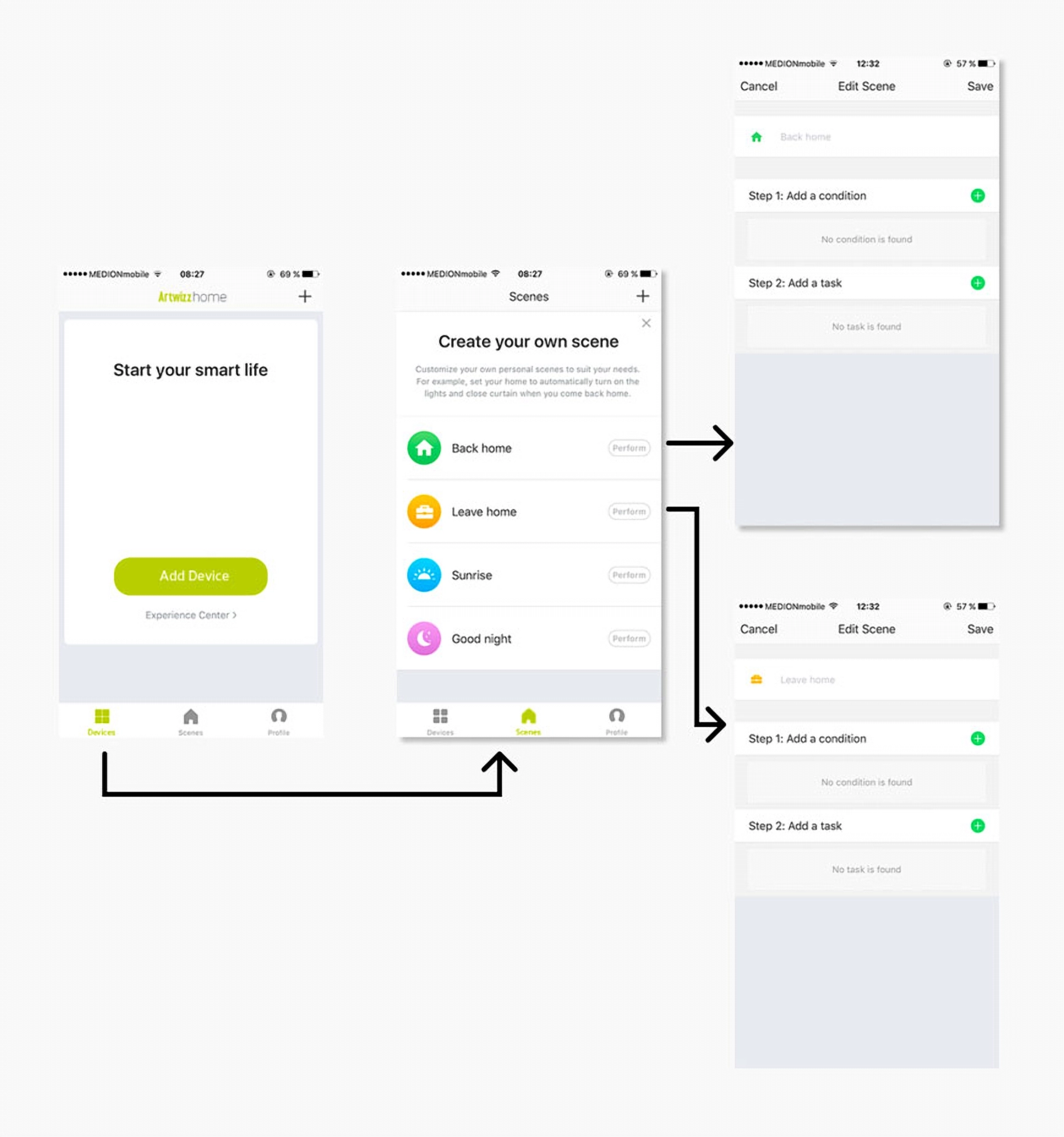
Basic user flows of the app. © Artwizz GmbH
We tested the app, discussed and decided these changes in the design team. One of our industrial designers was in contact with Tuya.

ArtwizzSmart app: Choosing the appliance plug / Adding a scene / Adding a device. © Artwizz GmbH
Descision 3
People wanted to charge several devices and still see their phone
During development, I looked into what people need from socket adapters and chargers and what helps them at home. Most of the testers used several plug adapters. When we described charging phones and tablets through the SmartPlug, one need dominated: charging several devices at once.
People also worried that a charging phone would hang from the socket or end up on a shelf or in a corner, where they would not see an incoming call or message.
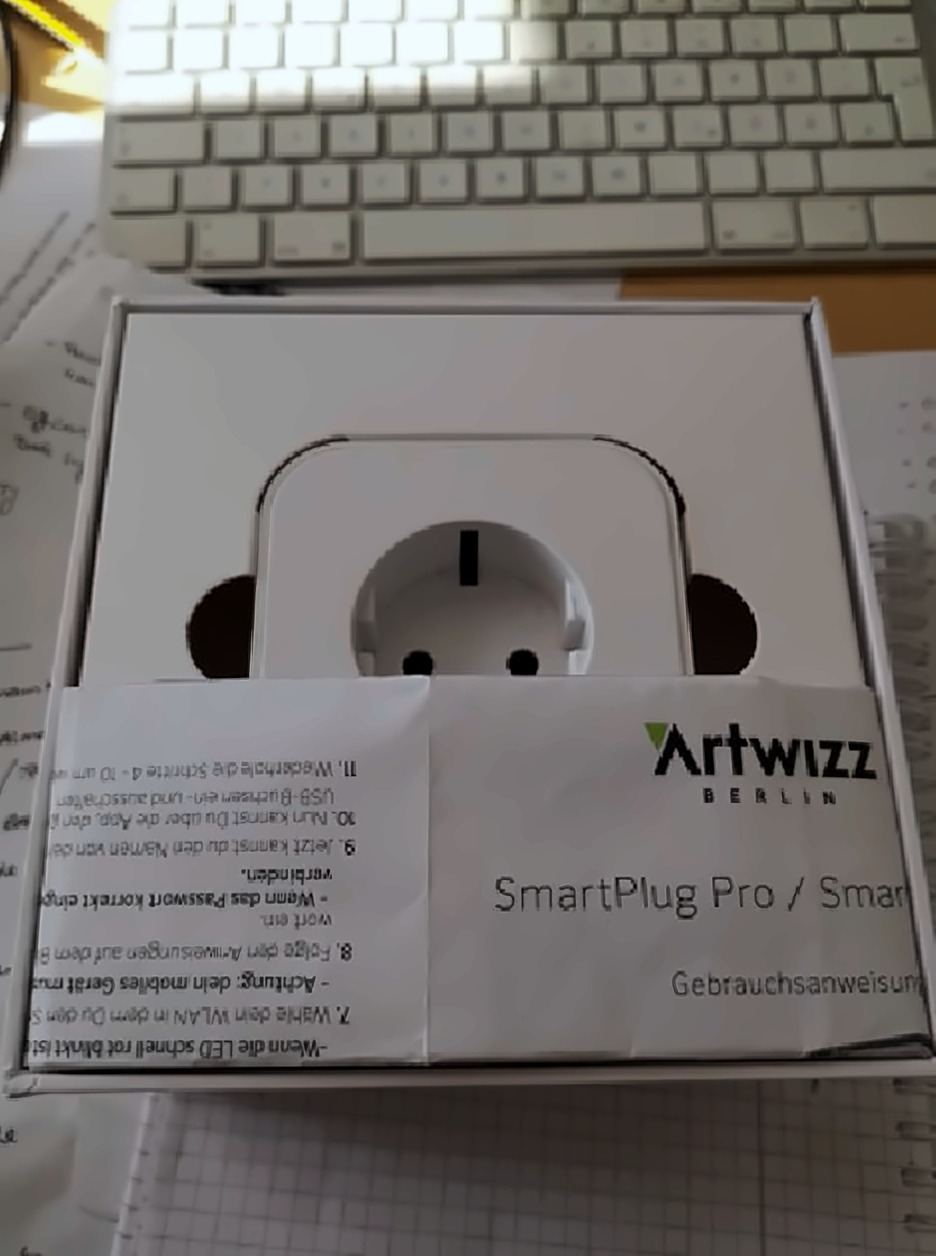
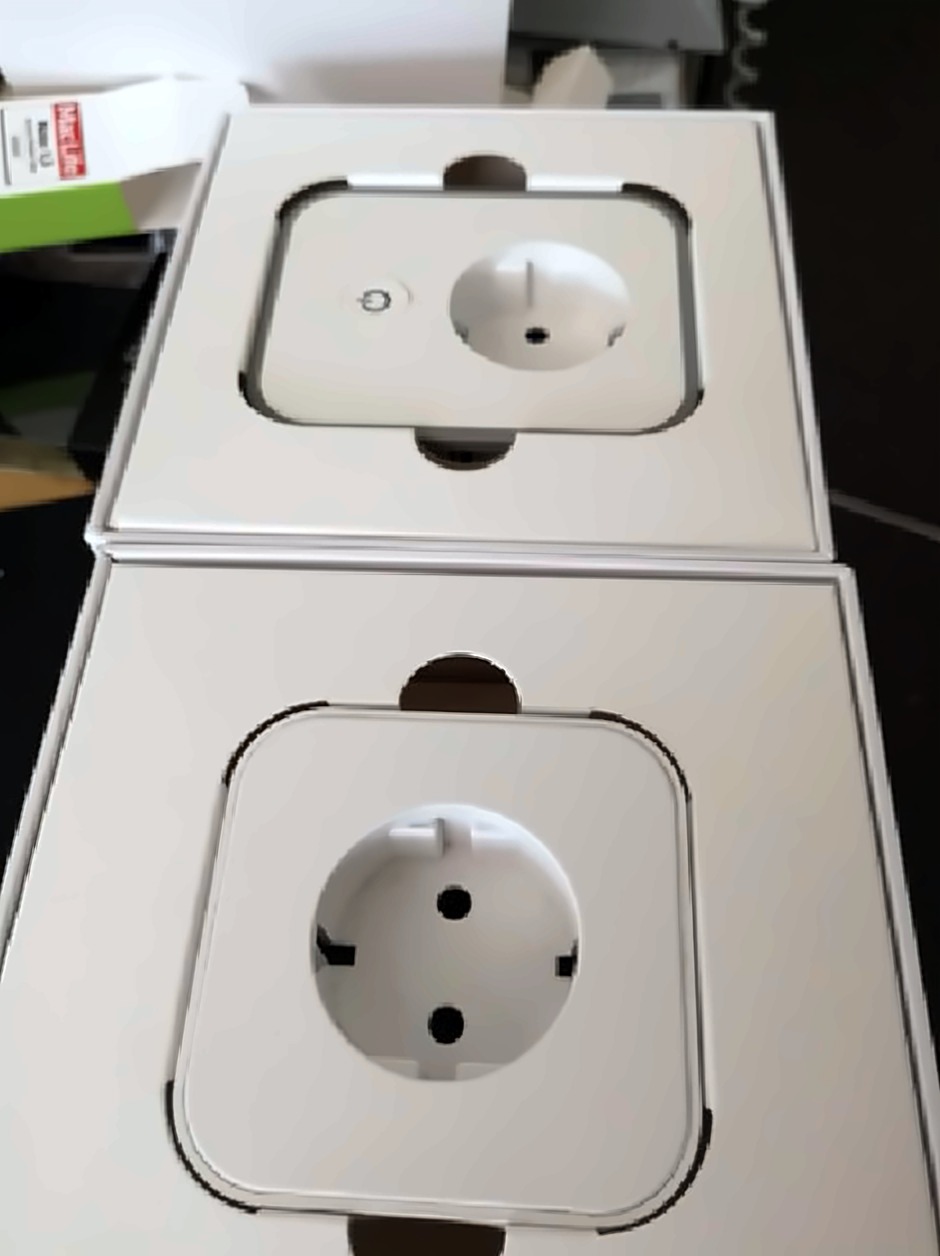
I discussed the results with the team and, together with management, decided to develop a second model. SmartPlug Pro holds a phone or tablet upright while it charges and has a socket and two USB ports, each of which can be switched on and off in the app.
We built the Pro as a 3D-printed prototype, developed quick packaging for it and presented both plugs internally as a set. We designed the set so that our CEO could show it to retail partners directly and still make changes. He did, and the retailers asked for changes to the packaging.
Descision 4
Lined up a second manufacturer before we needed one
While looking for production partners, I found a second manufacturer and had prototypes made there as well.
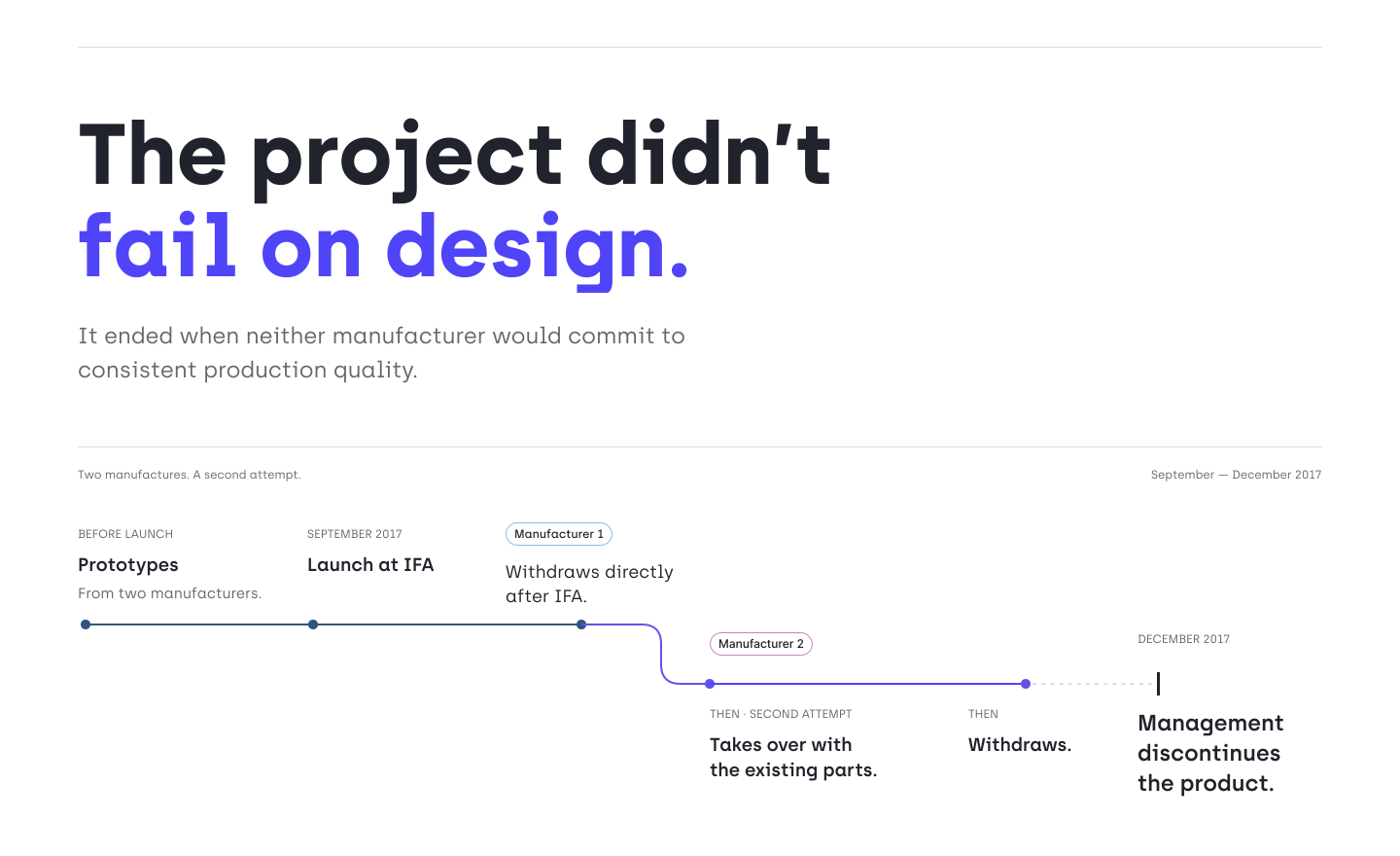
Both withdrew for the same kind of reason. For the first, ensuring the quality TÜV requires was too much effort. The second took over with the existing production parts, but sustainable production at that quality was too demanding for them as well.
The backup kept the product alive once. It could not keep it alive twice.
Maintaining consistency across teams and continents
I was responsible for the design direction across both devices and the app, including the creation and application of visual and interaction guidelines.
Our collaboration extended to development and manufacturing partners in China. During on-site visits, we worked through interaction and visual specifications screen by screen and clarified technical requirements with local stakeholders.
The work demanded more than handing over polished screens. It required ensuring that decisions remained understandable as they moved between digital concepts, engineering and production.
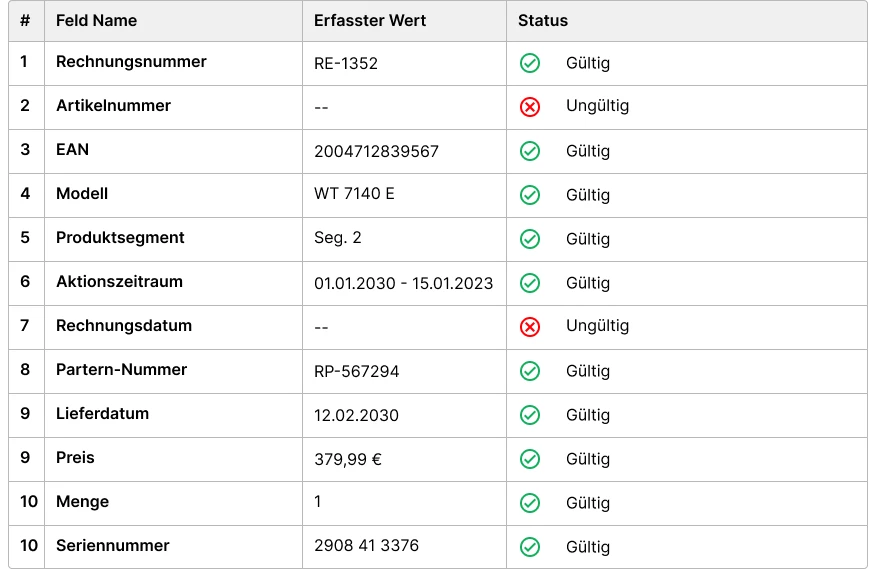
Invoice list concept with status filters, search, and direct access to individual invoice cases.
Decision 4
Keeping a second manufacturing option available
During supplier selection, I proposed involving two manufacturers and having both produce prototypes. Both were introduced to the product requirements and intended experience.
Three months before the planned IFA launch, the first manufacturer withdrew because it considered the required German safety standards too demanding. The second manufacturer could take over under those requirements, and the existing hardware and UX concepts were largely retained.
The earlier decision created a practical fallback. It did not eliminate the longer-term dependency on external manufacturing.

SmartPlug and SmartPlug Pro at IFA 2017. © Artwizz GmbH
Launched, then discontinued
Two smart plug products and a companion app reached the market and were presented at IFA Berlin. Retail partners had placed orders before launch.


The Closing Chapter
After launch, the second manufacturer also withdrew. As competing devices became more compact, continued development would have required additional time, investment and stable production capacity. The project was discontinued in December 2017.
The experience changed how I approach connected products. Leading the design means keeping physical and digital interactions coherent while accounting for the operational dependencies that determine whether the product can be sustained.
What I owned and shaped
Owned
- Identified and advocated the Smart Home opportunity
- Led the overall design direction and consistency across two hardware products and the companion app
- Guided interaction and visual specifications; proposed involving two prototype manufacturers
- Collaborating with a second manufacturer
Co-defined with a second UX designer
- Cross-disciplinary approach with management and IT
- Hardware interaction decisions with industrial and product development
- App direction within the selected white-label platform
- Requirements and handoff with development and manufacturing partners
Done by others
- Management made business and investment decisions
- Recommendation of the white-label approach
- Engineering and technical implementation
- Safety compliance and production feasibility
Slider showing the reference design system from Six Day and our developed design system
How about levelling up together?
© Carla Eckhard 2026
Created with joy in the Berlin – capitol of the Currywurst 
Privacy Policy
Legal Notice